
Snap!

Snap!

Matching Designs in the Metal Box Company Collections

A pattern of blue flowers on a white backgroung


The name ‘Metal Box Company’ looms large in the story of Mansfield industry and has a history running all the way back to the 1830s. The business started as a spice and mustard firm but shifted priorities when it became clear that the market was bigger for the metal packaging tins than for their contents. By 1890 they were trading as Barringer, Wallis and Manners. As well as commercial packaging, they made tins for military purposes during the Boer and First World Wars. The business became part of Metal Box Company in 1939, making armaments as well as tins during the Second World War. The main factory site in Mansfield was on Rock Valley, near the centre of town. In 2010 the business moved out to a new site on Crown Farm Way in Forest Town. Through various changes of management and name, they are still making metal tins today, now as part of the Sonoco brand.
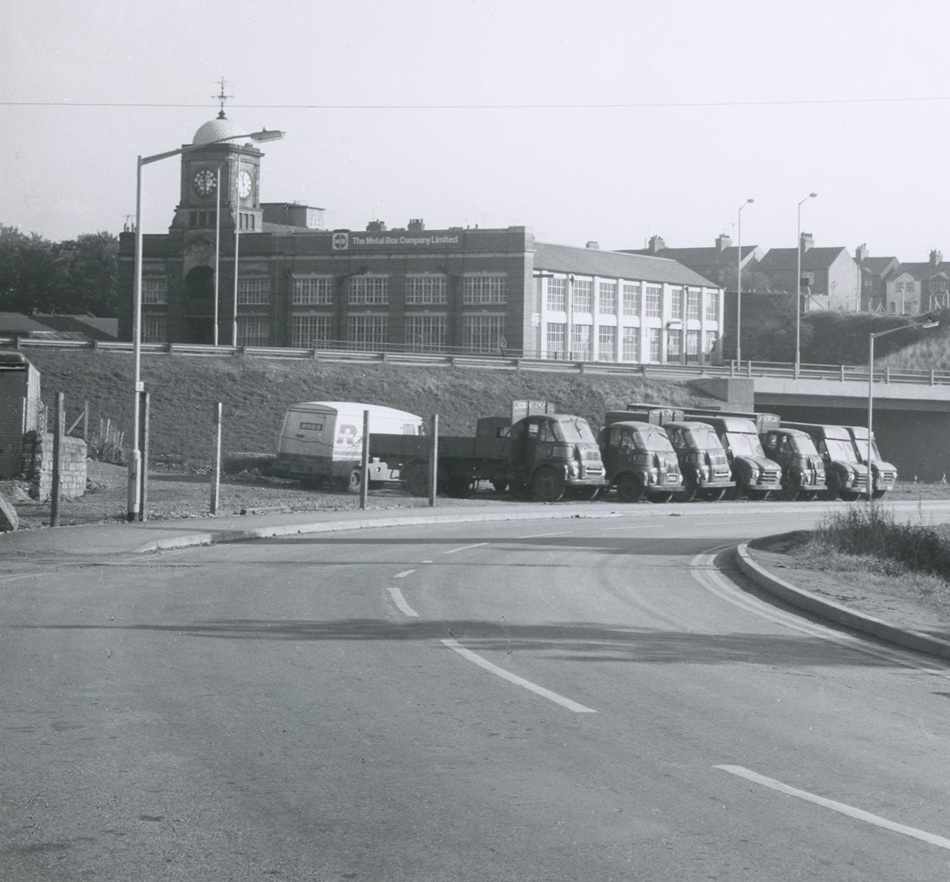
A black & white photograph of a factory with a fleet of vans in front

The Metal Box Factory on Rock Valley, 1973
 

Over time, many of the historic objects from Metal Box Company have come to the museum. In the 1990s we received a donation of product catalogues covering the period from 1921 to 1989. Following the closure of the Rock Valley factory, we were given a large selection of original artworks created by the company’s design team. We have also accepted many gifts of objects made by the company, and this collection was greatly expanded in 2010 when we bought a huge group of tins from the old factory site at auction. It is these three groups of items which formed the basis of a project undertaken this summer by one of our brilliant volunteers, Jay Warden:

“The Metal Box company has its home in the collections of Mansfield Museum; in fact, several collections. As a volunteer for the museum, I undertook a project about these collections: Metal Box Company’s designs, objects and catalogues. My aim was to find commonalities between these collections. To do so I had to familiarise myself with the collection. I did this through studying and informally recording the designs from the Metal Box Company; they would prove to be the most manageable collection to memorise when trying to find pairs, and later trios, of the same design.

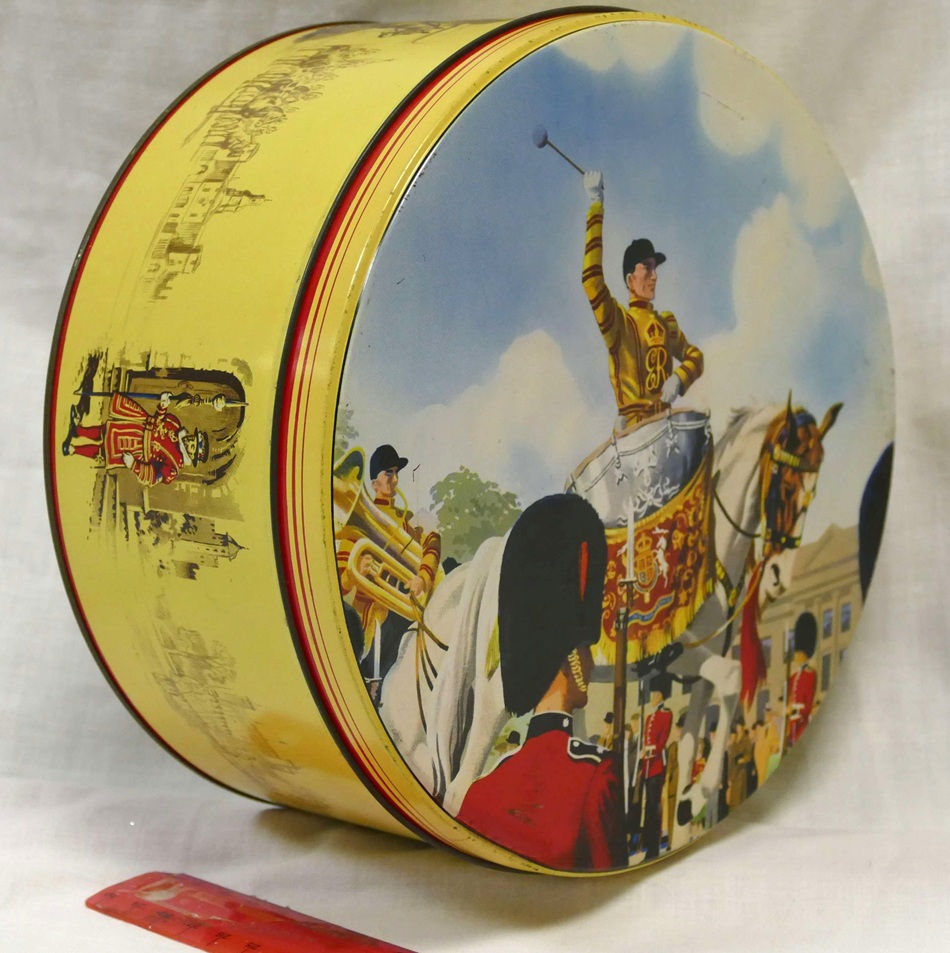
A circular biscuit tin with a design of a military drummer on the lid

Tin with a design of a mounted military drummer on the lid
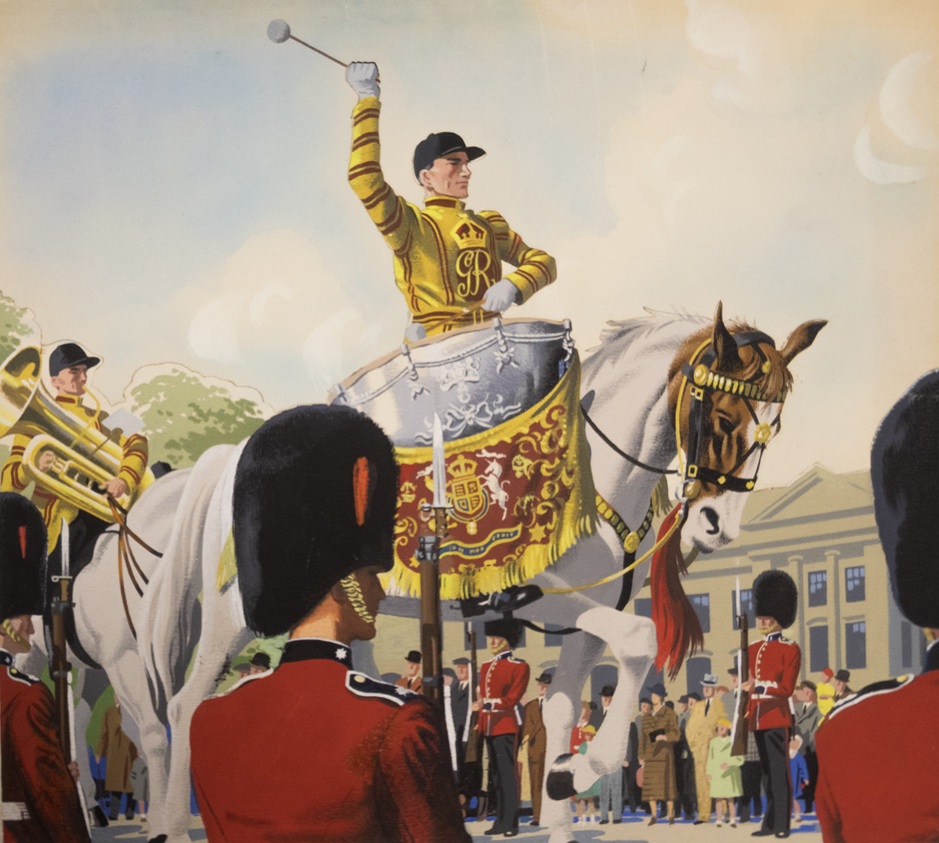
A painting of the military drummer

Original artwork from the Metal Box Company design department, showing the mounted military drummer
I found 3 design trios by the end of this project, which I labelled as blue pattern, brown monochrome landscape, and cockerel. These are not the names given by the Metal Box Company, their official design names are Tudor Blue decoration, Woodland and Chanticleer.


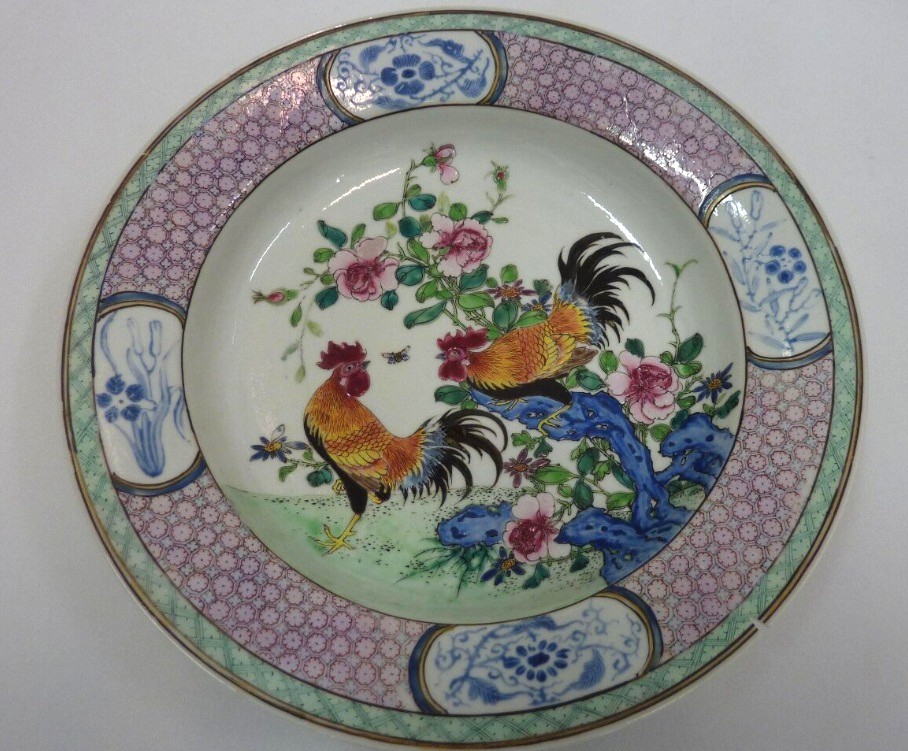
The Chanticleer designs were not original to the Metal Box Company but are derived from a porcelain dish in the V&A’s collection. This dish was made in China around 1730-40 in the Yongzheng and Famille Rose style. The Famille Rose style was introduced in the 18th century and characterised by the pink overglaze enamel as the dominant colour. The Famille Rose style originates from the Qing dynasty; this dish is from Yongzheng’s reign as Emperor (reigned 1722-1735).

A porcelain dish with a design of cockerels and peonies

Chinese dish in the collection of the Victoria and Albert Museum, London. (Museum number C.1424-1910)
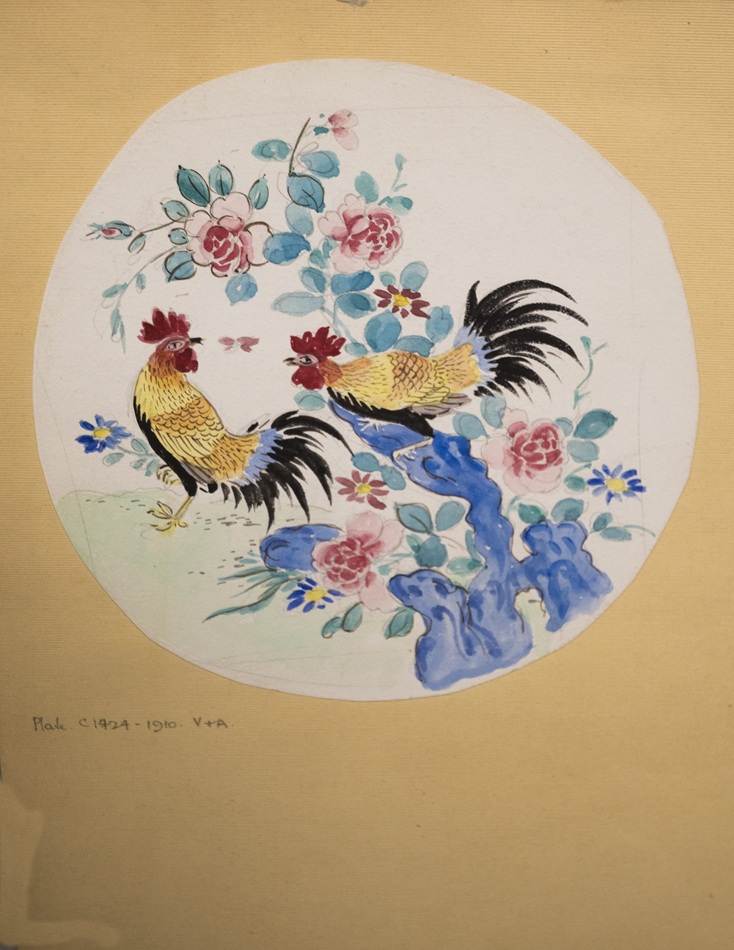
A painted design, with handwritten notes

Artwork from the Metal Box Company design department showing cockerels and peonies, with a note below identifying the dish it is inspired by
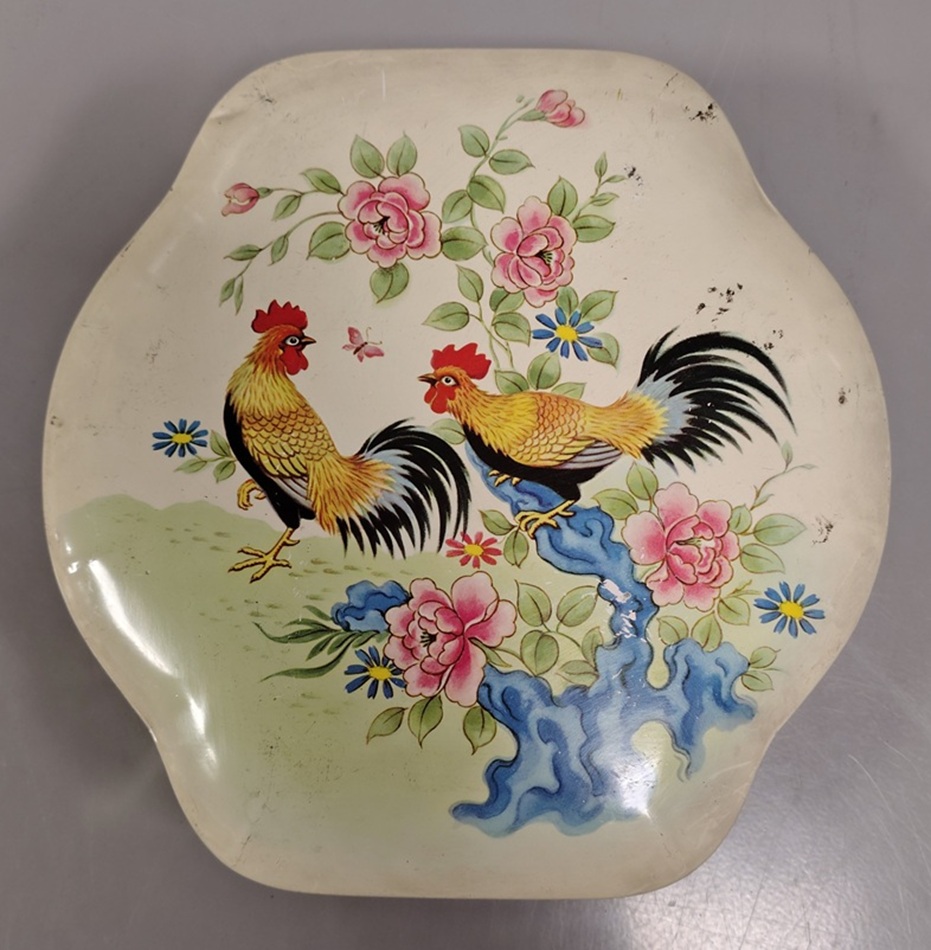
 

A hexagonal tin with cockerels and peonies on the lid

Metal Box Company tin with the cockerel design on the lid
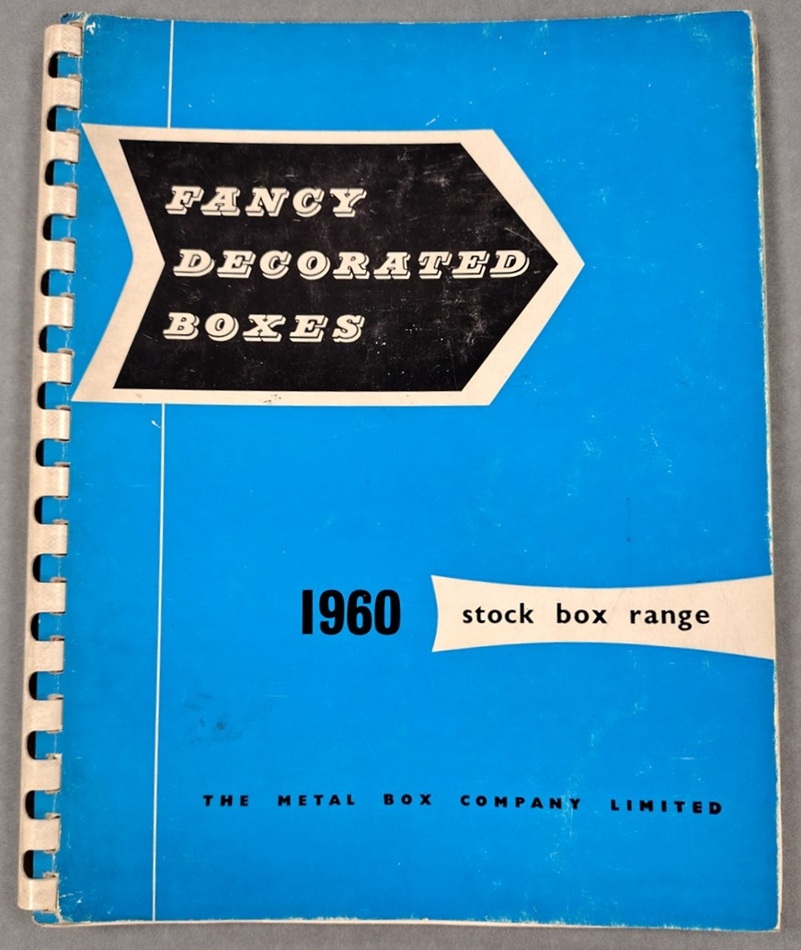
Cover of a product catalogue for 'Fancy Decorated Boxes'

The product catalogue which confirms that the cockerel design was used in 1960
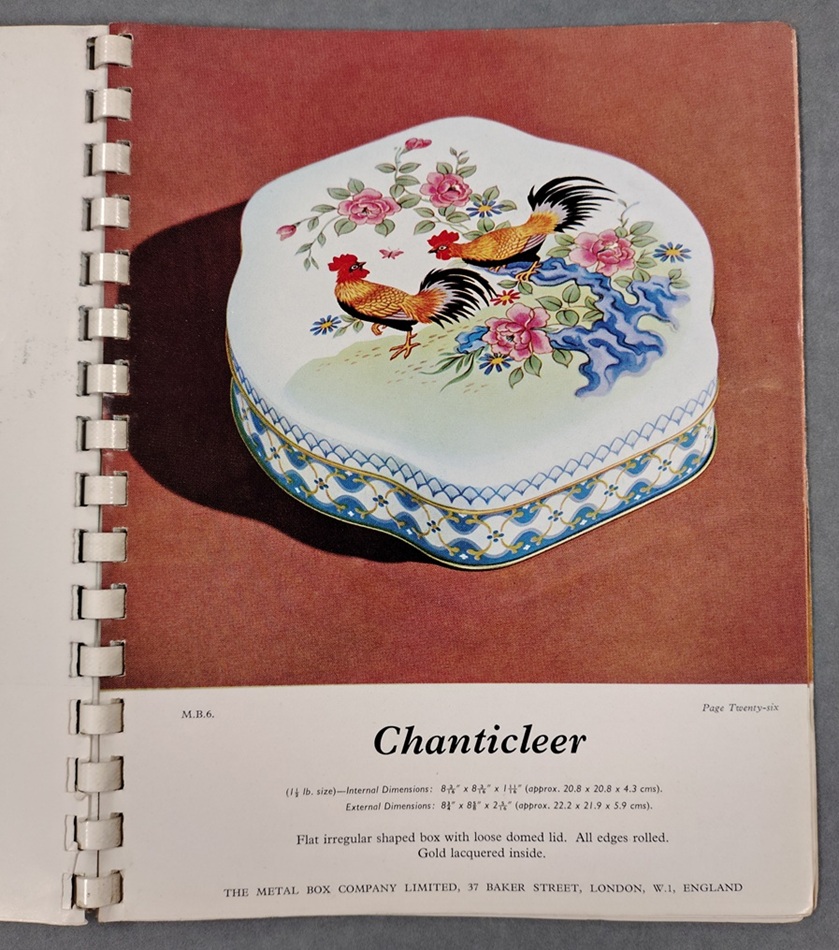
A page from the catalogue showing the cockerel design

The catalogue page confirming the design name as 'Chanticleer' (an old word for cockerel)

This design was the first I identified as a trio in the collections. It was visually distinct and grabbed my attention as an interesting design. Many designs in the Metal Box company collections lack distinctive features that allowed me to link them together.

The Tudor Blue decoration design is significant as it adorns many objects in the collection. It features as a part of the exhibition on the metal box company. It is a simple but effective design which fits in many styles of home. It does not surprise me that it is a popular item for the metal box company. This was an exciting discovery as the designs were not created as a single instance and shape but as modular sections to be tweaked and repeated in different forms.
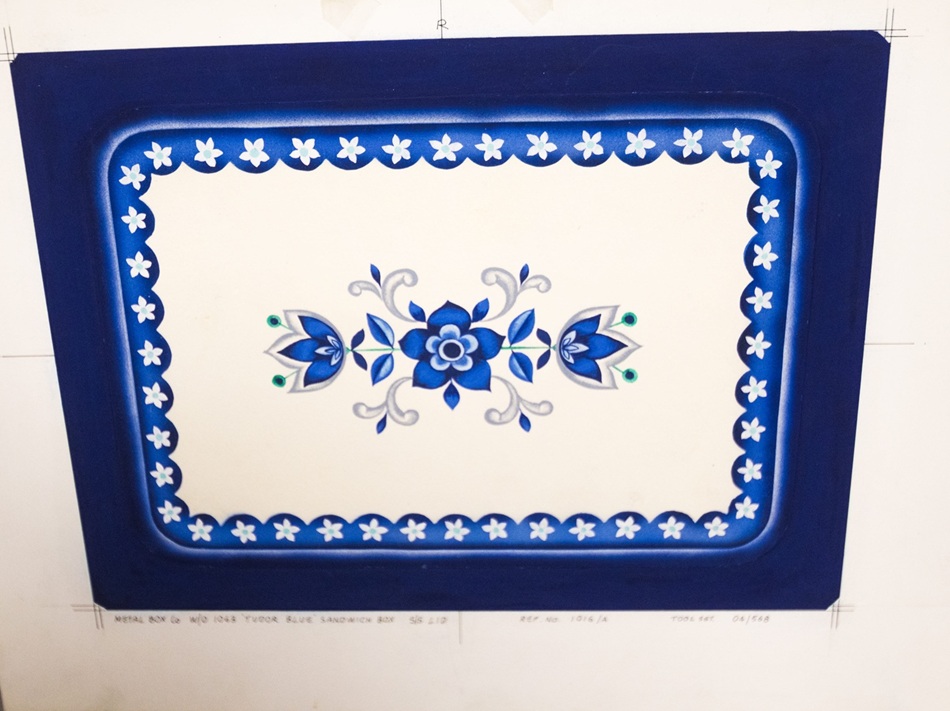
Design showing stylised blue flowers

Artwork showing how the Tudor Blue design could be used for a tray
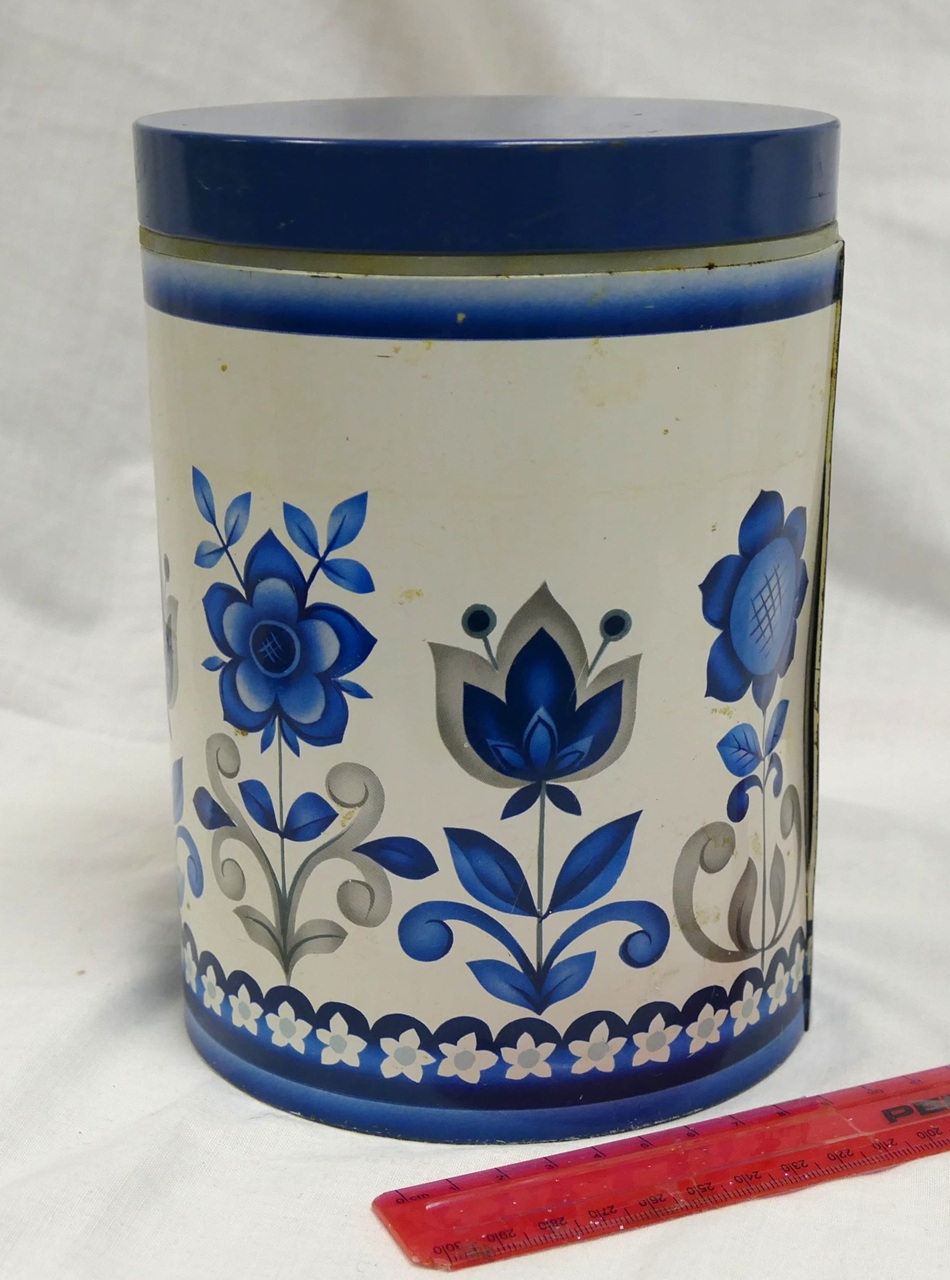
A circular canister decorated with stylised blue flowers

The Tudor Blue design on a circular canister from 1974
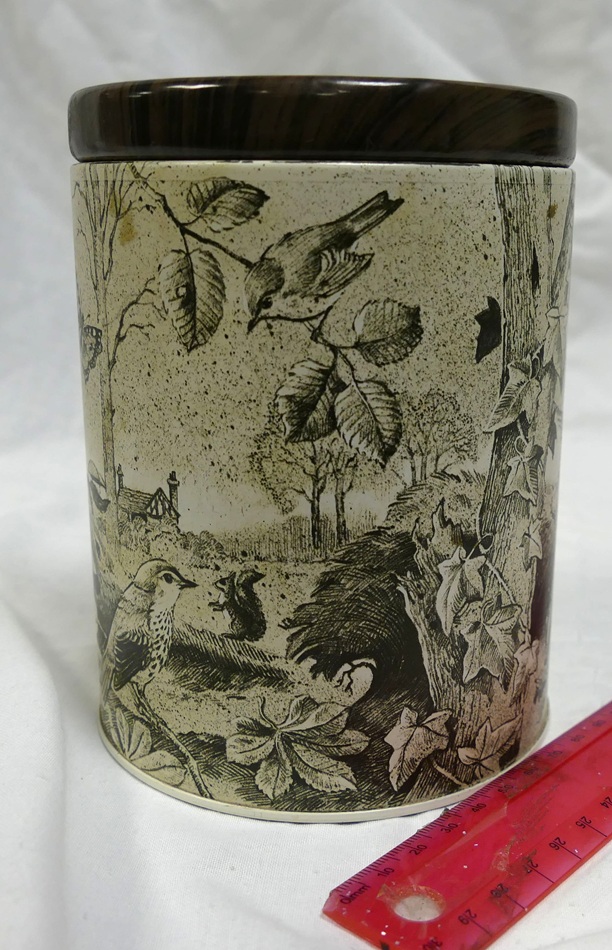
A circular canister with a sepia design of animals

A canister with the Woodland design, from 1979
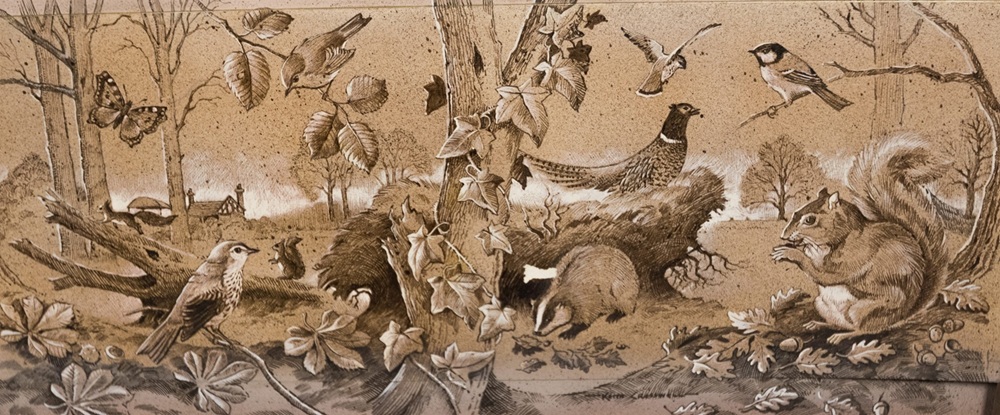
 

The Woodland design was one that surprised me. It did not strike me as a design that would become a trio. It’s distinctive style and design made it memorable however, it was not a style I expected to be prominent enough to become a trio.

This project has been really interesting. What first drew me to it was the opportunity to have a glimpse into the Metal Box company’s design process. With my background in Graphic Design this is a view into the past of the profession before the term was widely used and studied as such. What I adored about the collection of designs they had was the wide variety of styles and media. Despite this I did find that I began to identify commonalities in some pieces that led me to believe they shared a designer. I found this especially evident in their floral pieces. Which were a group I found difficult to match between collections. Both the similar styles and the subject of the artwork were the reason they were a particular challenge.”


The pairs and trios which Jay has identified in the Metal Box Collection are useful and enlightening. They help us to understand the process of moving from design to finished product, as well as letting us date some of the collection more closely and track changing fashions in design. The Metal Box Company collection has a lot of stories still to tell!

Painting of sepia design of woodland animals

Original artwork of the sepia Woodland design

Find Out More

The history of Metal Box Company is explored in the 'Made in Mansfield' gallery at the museum.

You can also see more of the tins from the factory (including more uses of the Tudor Blue design) in this blog post, published on Our Mansfield and Area in 2011, when the museum showed a temporary display of some of the collection we'd bought following the closure of the Rock Valley site.

The bowl which inspired the ‘Chanticleer’ cockerel design is in the online collection of the Victoria and Albert Museum, which you can visit by clicking here.

Jay Warden, Nottingham Trent University, and Anja Thompson-Rohde, Collections and Interpretation Officer, Mansfield Museum

Uploaded 16 October 2026