
Creating New Worlds
Creating New Worlds
Mansfield's World Famous Theatre Designers
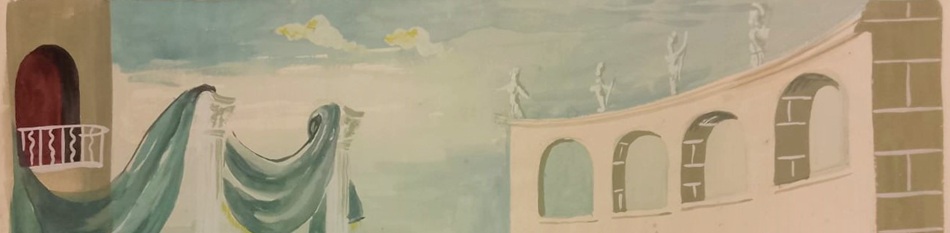
Detail of Carl Toms set design for Julius Caesar
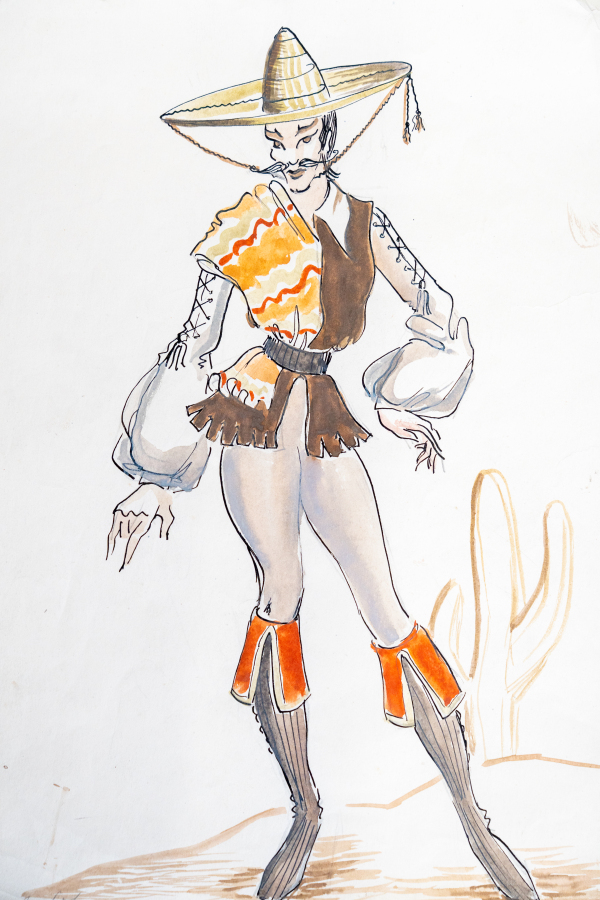
Carl Toms costume design for an unknown Central American character
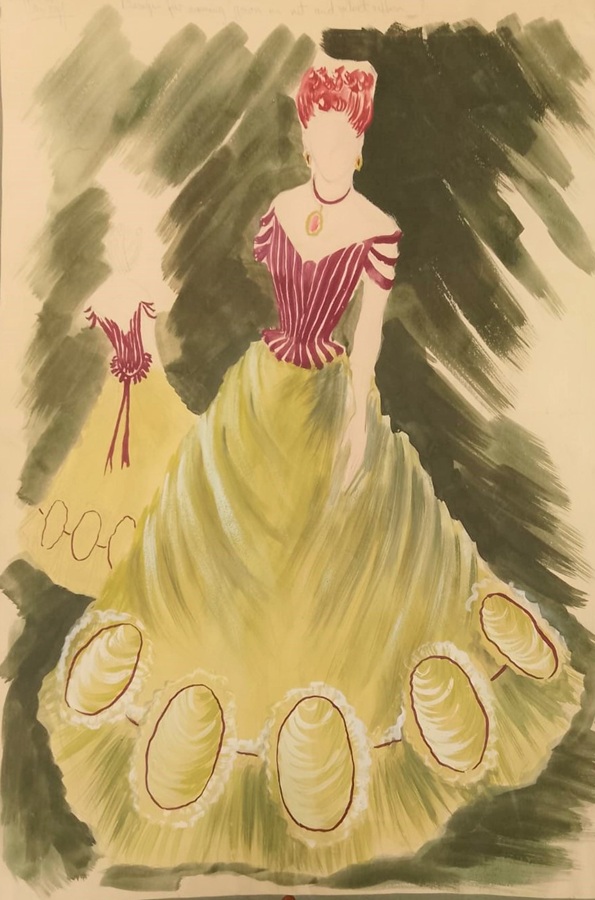
Alan Tagg costume design labelled "Design for evening gown in net and velvet ribbon"
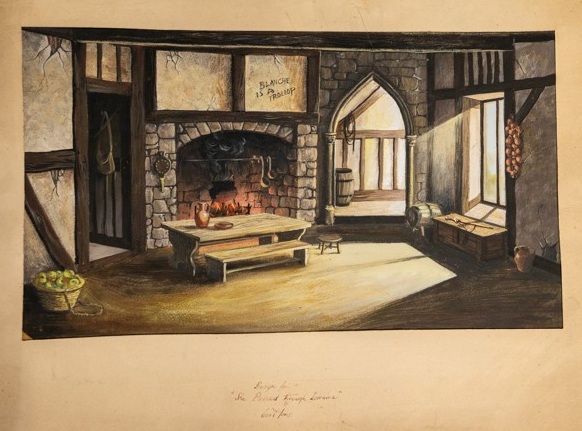
Carl Toms set design for "She Passed Through Lorraine"
"Oedipus at Colonus" is a tragedy by the ancient Greek playwright Sophocles, who lived in Athens from around 496 BCE to around 405 BCE. It was one of the last plays he wrote, shortly before his death, and it was premiered posthumously in 401 BCE.
The museum collection contains three of Carl Toms' designs for this play - one set design and two costumes. The set is for a scene in a woodland clearing, with steps leading up to a small plateau featuring a bench beside a classical-style monumental slab showing a mounted horserider and topped with facing lions. The costumes are for 'Creon, King of Thebes' and 'Polynices, son of Oedipus'.
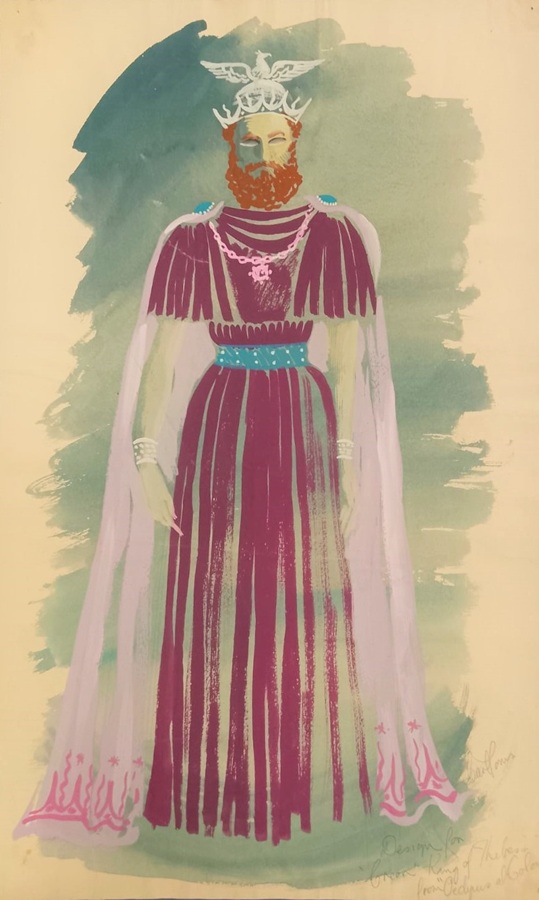
Carl Toms costume design for King Creon
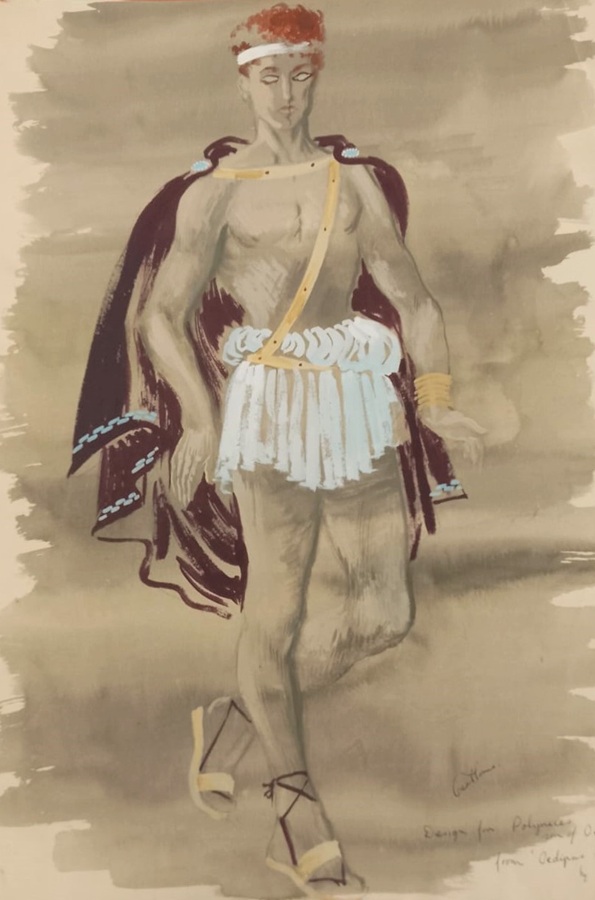
Carl Toms costume design for Polynices
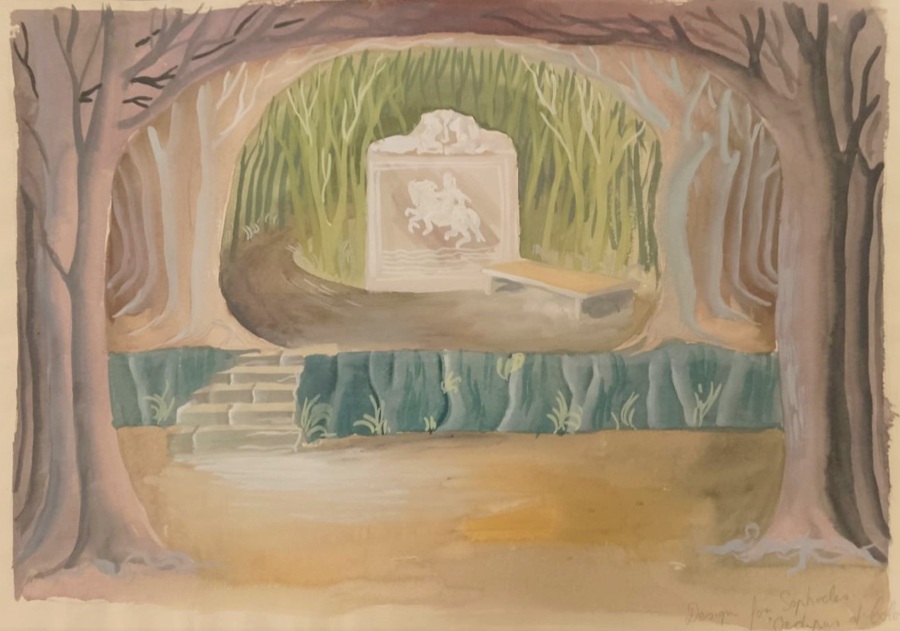
Carl Toms set design for Oedipus at Colonus
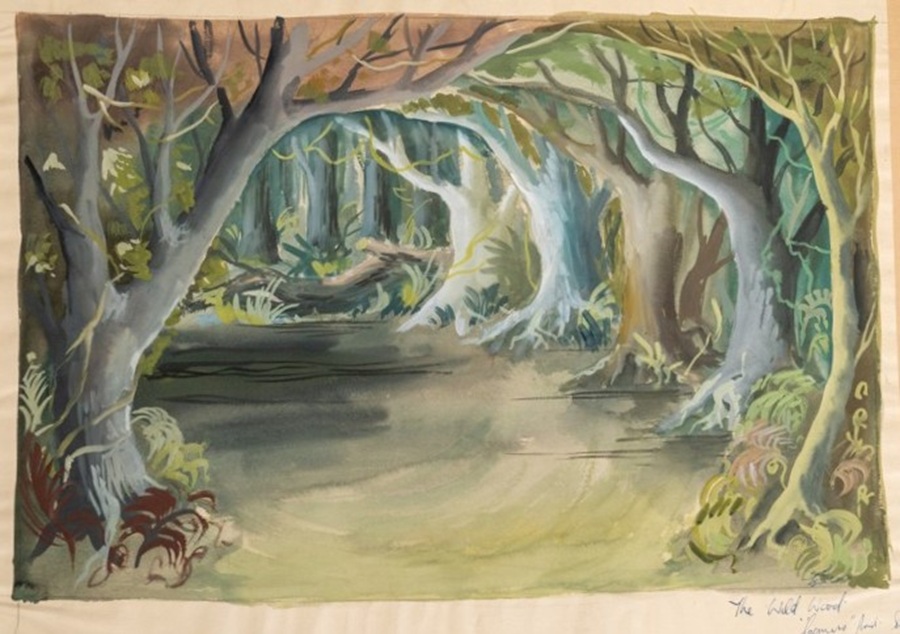
Carl Toms design for the Wild Wood
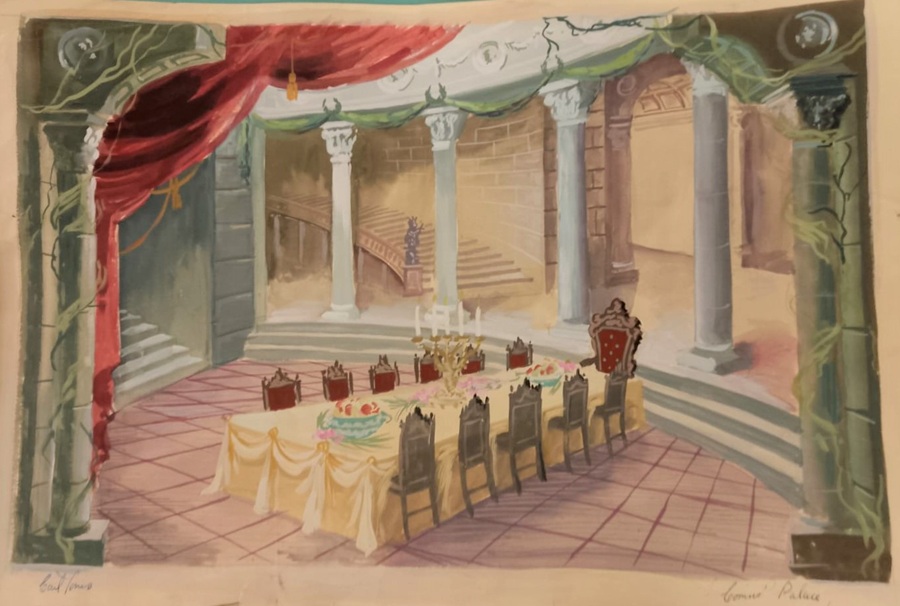
Carl Toms design for Comus' palace
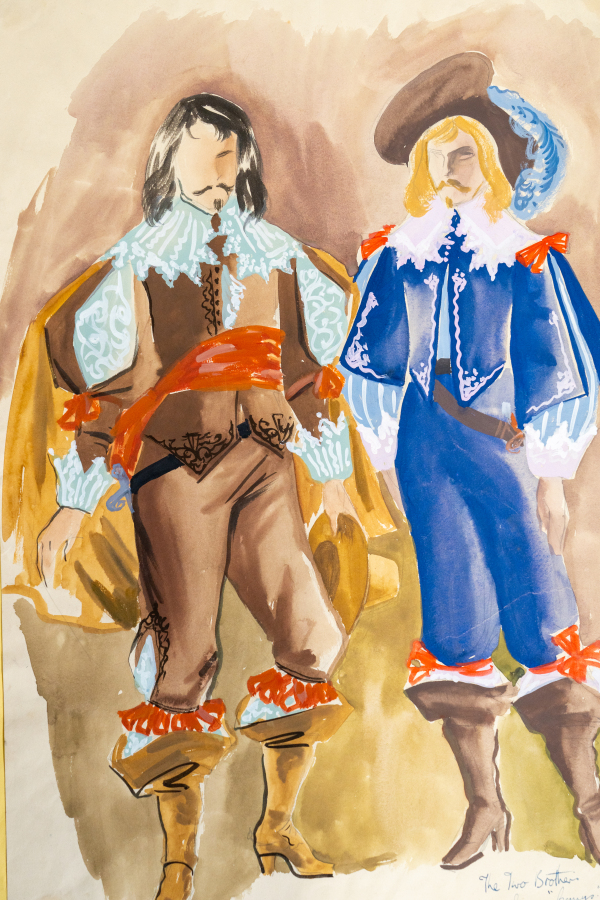
Carl Toms costume design for the two brothers
Another pair of costumes are shown in this design for the characters Rosalind and Orlando in 'As You Like It' by William Shakespeare (1564-1616). It was written around 1599, and published in the posthumous First Folio in 1623. Rosalind and Orlando are the romantic lead characters in the play.
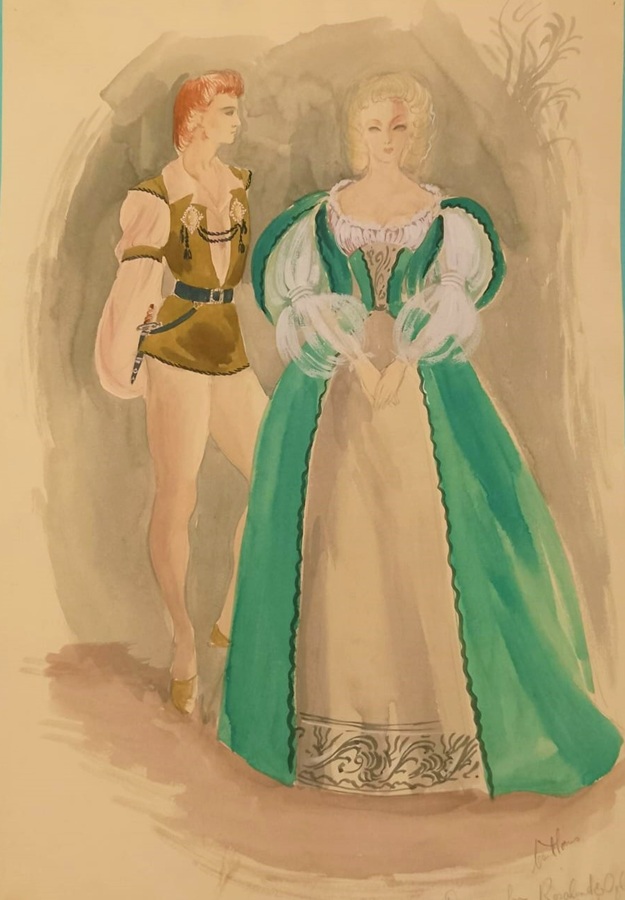
Carl Toms costume designs for Rosalind and Orlando
This design for a costume for Jane Eyre shows both the front and back of the dress, much like the evening dress design by Alan Tagg above. 'Jane Eyre' is a novel by Charlotte Bronte, published in 1847 under the pseudonym 'Currer Bell'. Since its publication it has been adapted many times for theatre, radio, television, and film.
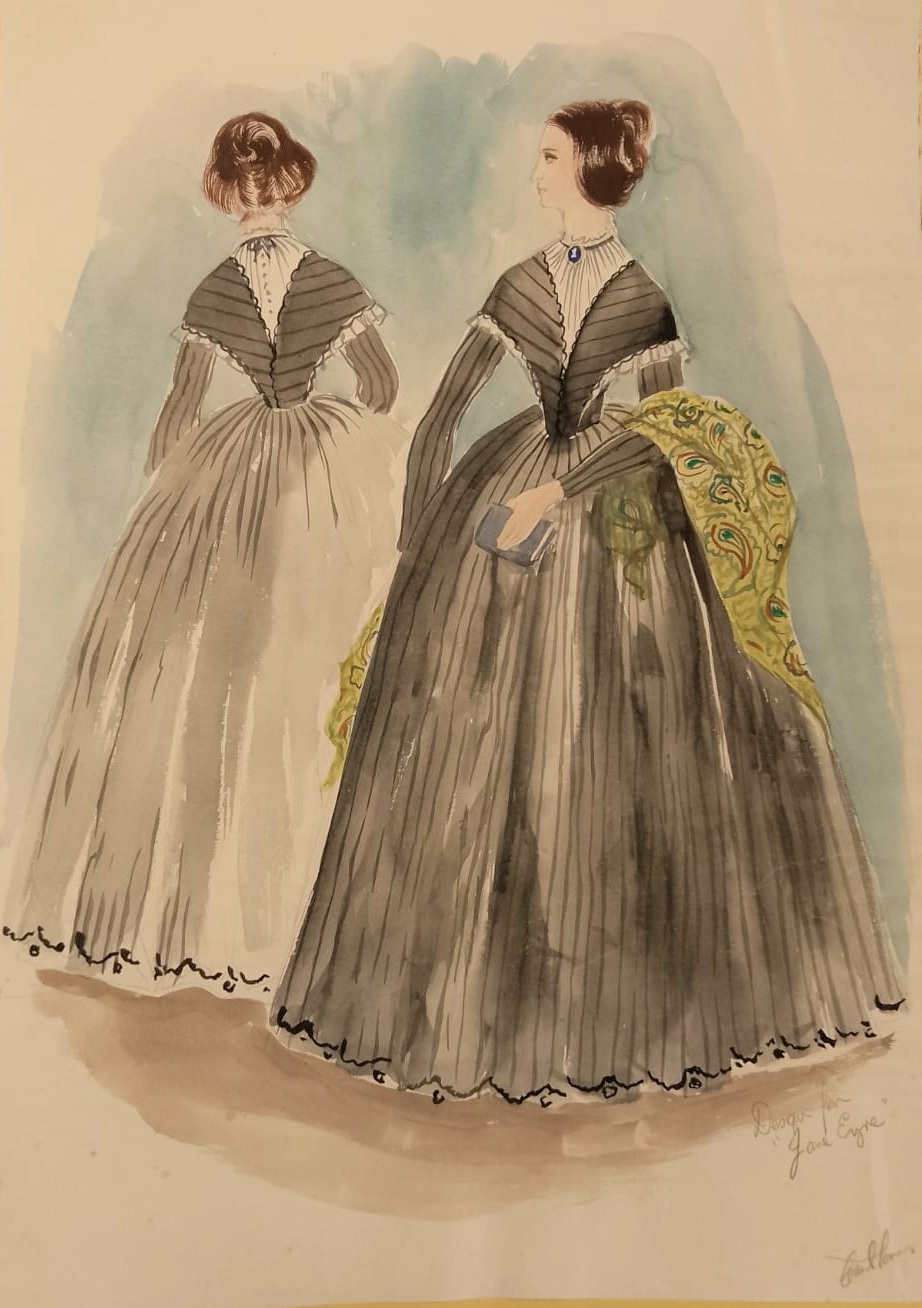
Carl Toms costume design for Jane Eyre
There are also two ballet costumes included in the Carl Toms designs at Mansfield Museum.
One is labelled as "Design for Prince Siegfried in 'Swan Lake' Act 4". The famous ballet of Swan Lake was composed by Pyotr Ilyich Tchaikovsky (1840-1893) between 1875 and 1876, premiering in 1877. The story contains traditional elements of Russian and German folk tales, and revolves around a beautiful princess, Odette, who has been transformed into a white swan. Prince Siegfried is the male romantic lead character, who falls in love with Odette.
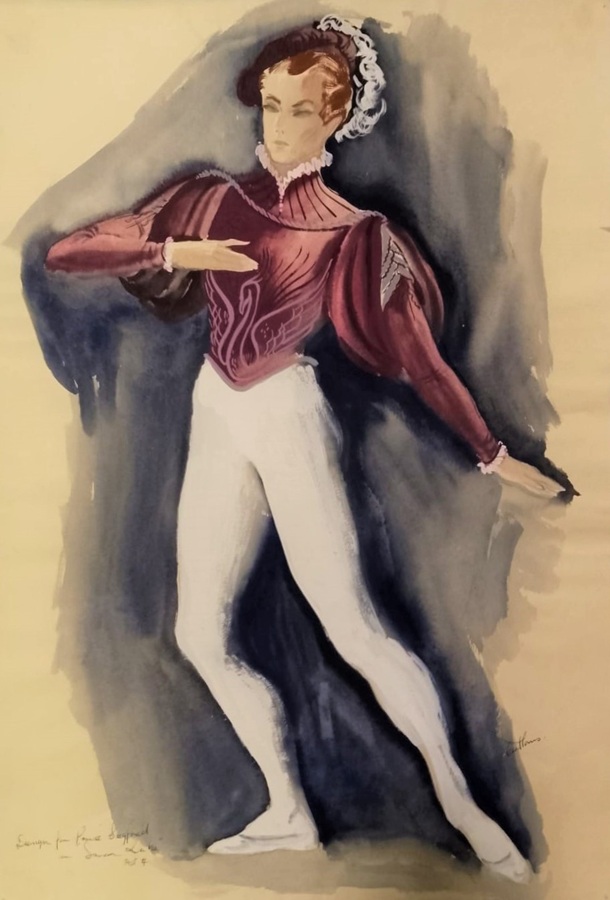
Carl Toms costume design for Prince Siegfried
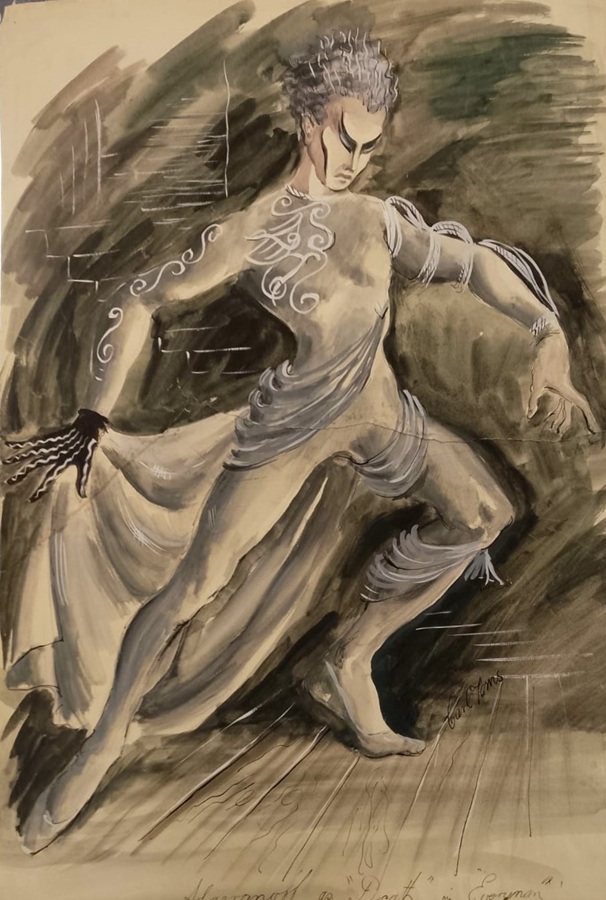
Carl Toms illustration of costume for Death
The other ballet costume seems to be a reworking of an existing idea. It is labelled "Algeranoff as 'Death' in 'Everyman'". 'Algeranoff' refers to Harcourt Algeranoff (1903-1967), a renowned ballet dancer, choreographer and dance teacher. Early in his career, he joined Anna Pavlova's company, changing his name from Harcourt Algernon Leighton Essex to the more Russian-sounding Algeranoff. In 1943 he joined The International Ballet, a company formed by Mora Inglesby two years earlier, and in that same year they premiered a ballet of 'Everyman', choreographed by Inglesby to music by Strauss. The ballet was based on an anonymous morality play of the same name, written around 1530. It follows the character of Everyman as he journeys through life, encountering personifications of various deities and apects, including Death; a part danced by Harold Turner.